Loading...
Style guides, outfit breakdowns, and deals — curated weekly for the modern Pakistani man.
12,000+ subscribers · No spam · Unsubscribe anytime
Use this Men Fashion Sense outfit example to learn winter outfits for men: jackets, boots, sweatshirts, denim, neutral colours, and layering rules that look warm but still clean.
Most men have the same winter problem.
They know how to stay warm, but they do not know how to stay sharp while doing it. The outfit becomes too bulky, too dark, or too random. A heavy jacket is thrown over whatever was already there. The boots do not match anything. The jeans are either too skinny for the layers or too baggy for the shoes.
This outfit example gives a better route. It shows winter outfits built around simple pieces: chore jackets, crewneck sweatshirts, denim, chinos, boots, clean sneakers, beanies, watches and glasses. Nothing is loud. Nothing depends on designer logos. The improvement comes from colour control, texture, proportion and footwear.
The rule is simple: winter style works when your layers have structure, your colours repeat, and your shoes match the weight of the outfit.
The outfit caption frames winter as a chance to change the look, not just add warmth. The downloaded carousel proves that visually. Across the images, there are three clear outfit lanes:
The strongest lesson is not "buy this exact jacket." It is this: build your winter outfit from the outside in.
Start with the visible layer. Pick the jacket or sweatshirt first. Then choose trousers that balance it. Then finish with boots or sneakers that match the formality and weight. A winter outfit fails when each piece belongs to a different mood.
This guide is for you if winter makes you feel less put together.
Maybe your summer outfits are easy: T-shirt, trousers, clean sneakers. But once the temperature drops, you start stacking random layers. The shape gets messy. Your nice trousers disappear under a bulky jacket. Your shoes look too light. Or you wear all black every day because it feels safe.
You do not need a huge winter wardrobe. You need a few formulas that can repeat.
If you are still building the foundation, start with the basics in Men's Wardrobe Essentials, then use this article to make those essentials work in cold weather. For fit basics, use Men's Style Basics. For shoe decisions, connect this with Men's Shoes Every Man Should Own.
Winter outfits need visual weight.
A thin canvas sneaker can look fine with a summer T-shirt. It often looks weak under a thick jacket. A tight pair of jeans can work with a fitted shirt. It can look unbalanced below a boxy overshirt. A large coat can look stylish, but only if the trousers and shoes can support the volume.
Think in three parts:
The outfit looks right when these three parts agree.

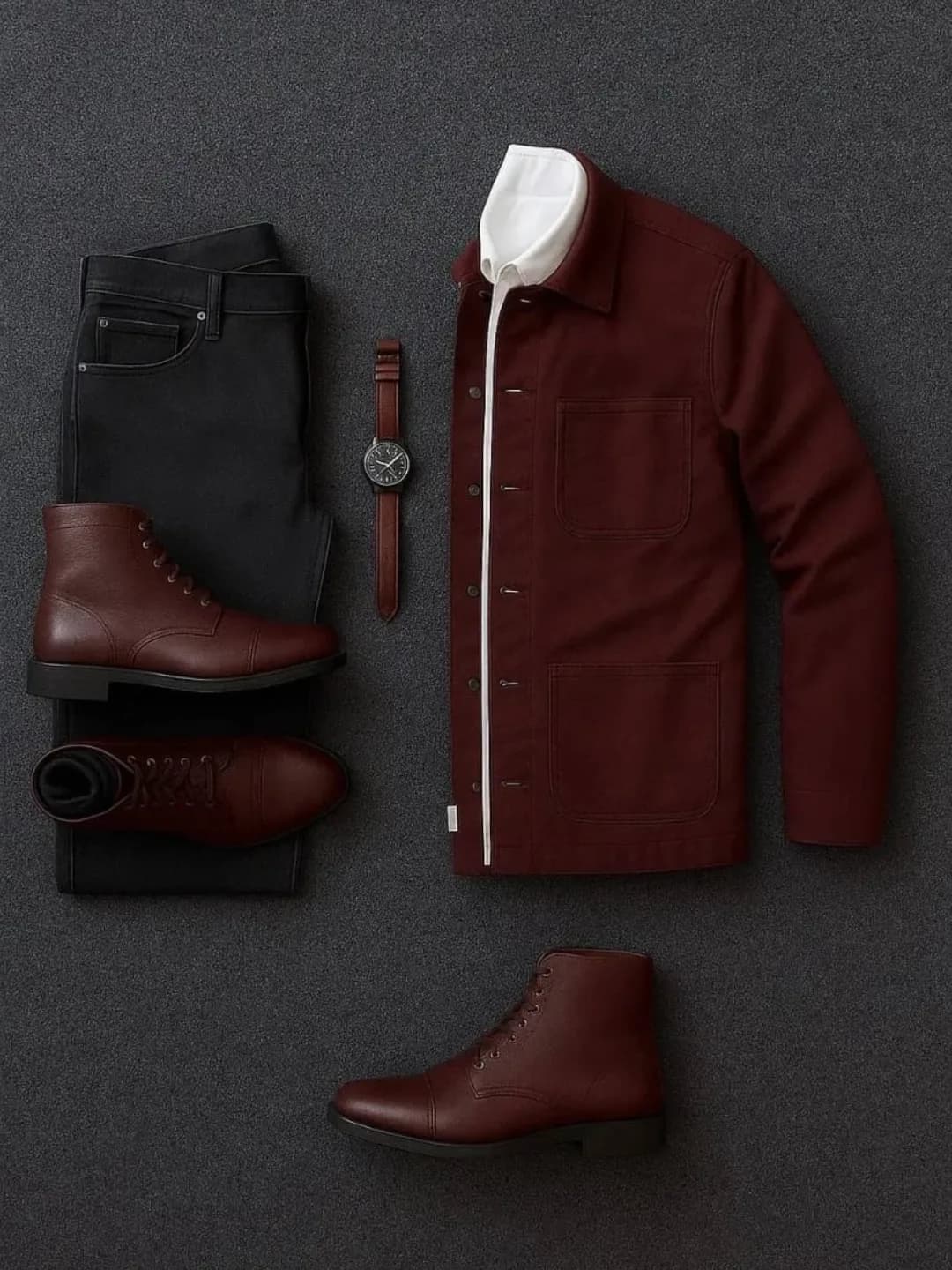
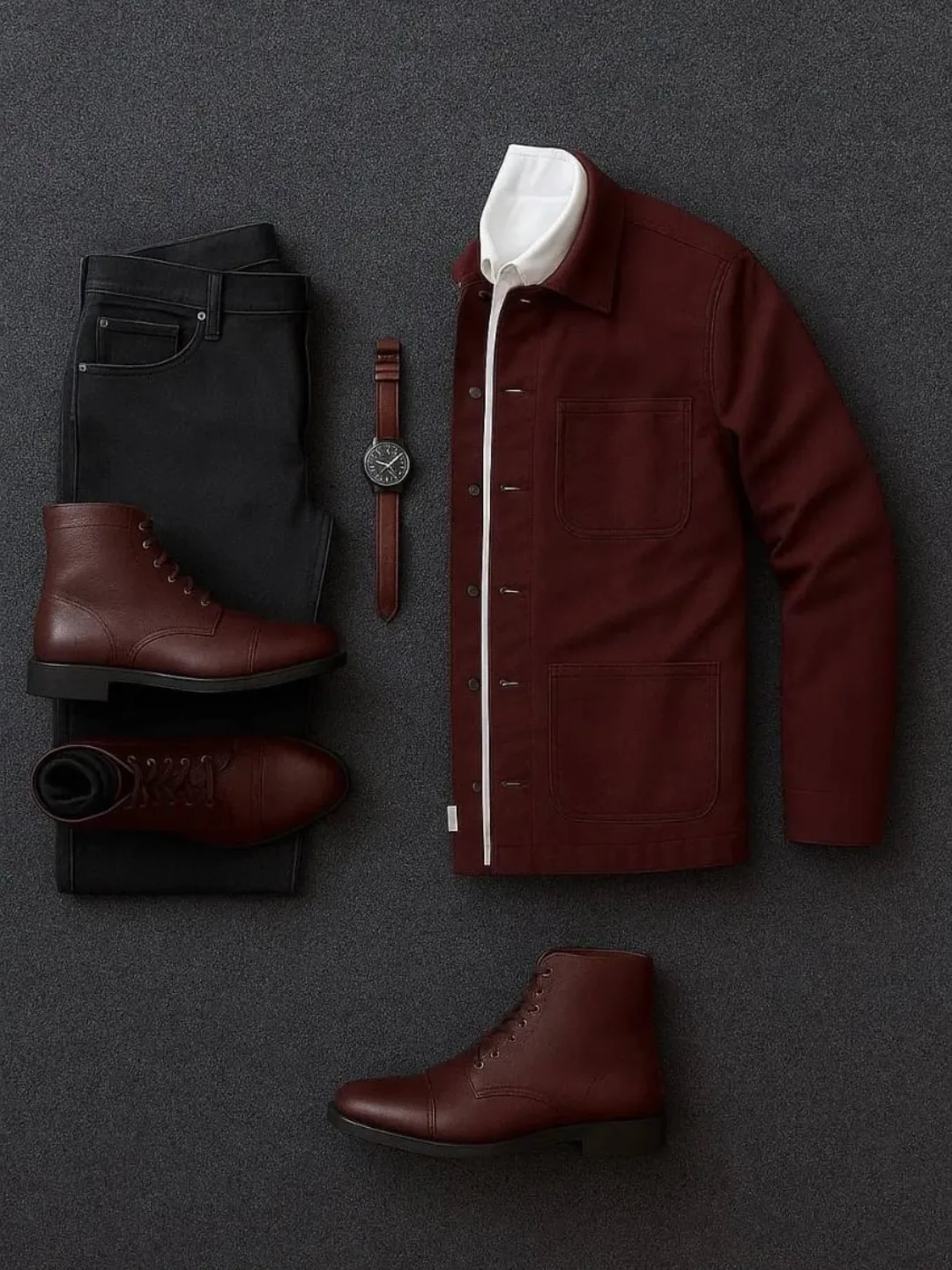
In the burgundy outfit, the jacket is the statement. The white layer underneath breaks up the darker colours. The dark trousers keep the lower half quiet. The brown boots and watch add warmth without fighting the jacket. This is a good example of one strong colour being controlled by neutral pieces.
The first flat lay is one of the easiest winter formulas to copy:
This works because the colours repeat. Burgundy appears in the jacket and boots. Black appears in the jeans and grounds the outfit. White appears near the face and keeps the look from becoming too heavy.
A lot of men avoid burgundy because they think it is too bold. It is not loud when you treat it like a winter neutral. Burgundy, forest green, chocolate brown and navy all work well in cold weather because they have depth.
The key is restraint. Do not add another bright colour. Do not add flashy sneakers. Let the jacket be the interesting piece and keep everything else disciplined.
Best occasions: casual office, dinner, city weekend, creative workplace, winter date where a suit would be too much.
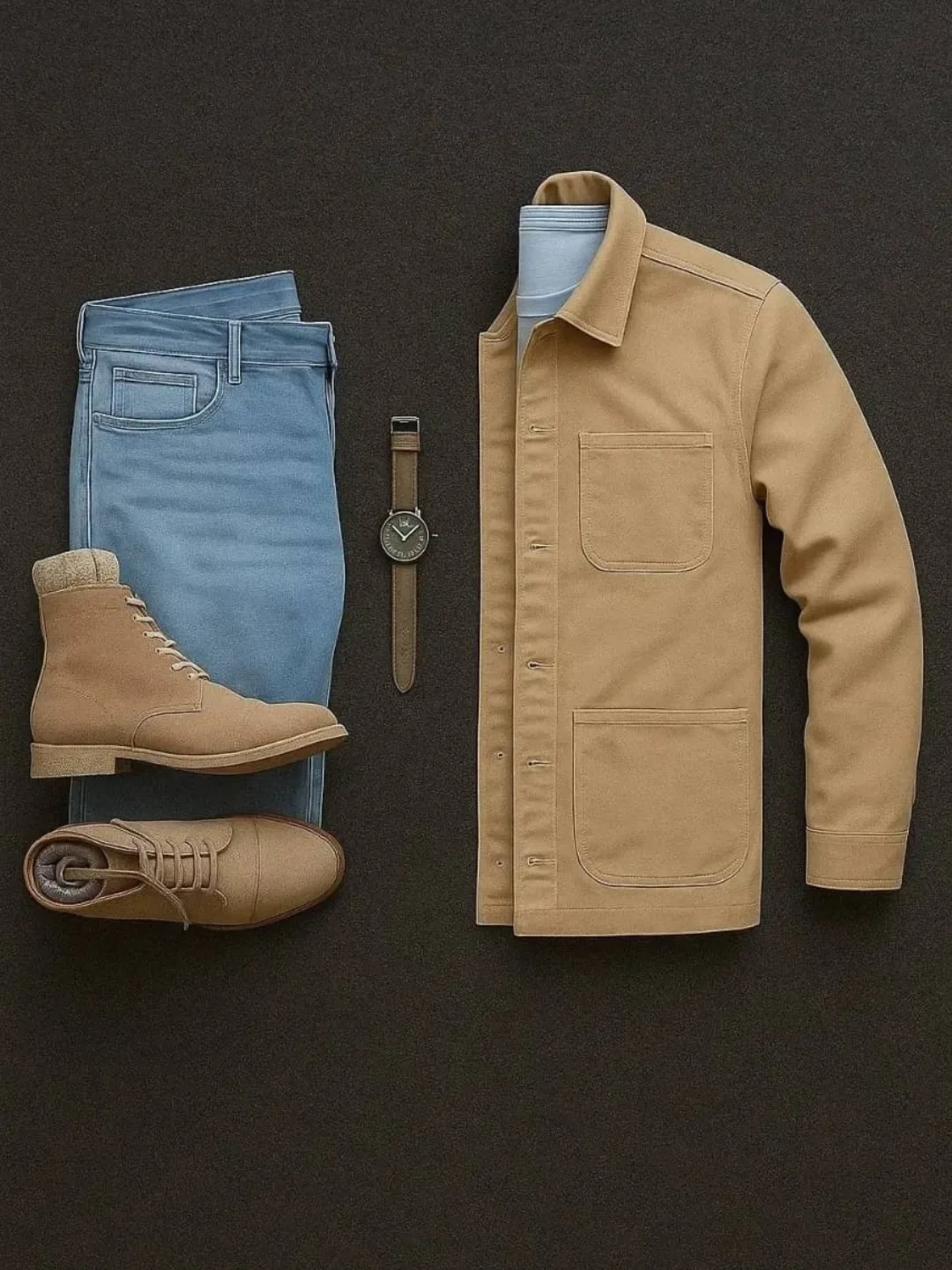
The tan jacket images show a softer winter direction. The flat lay uses a tan chore jacket, light blue denim, tan boots and a muted watch. The worn outfit shows the same idea in a workshop-like setting: practical, clean, masculine without trying too hard.
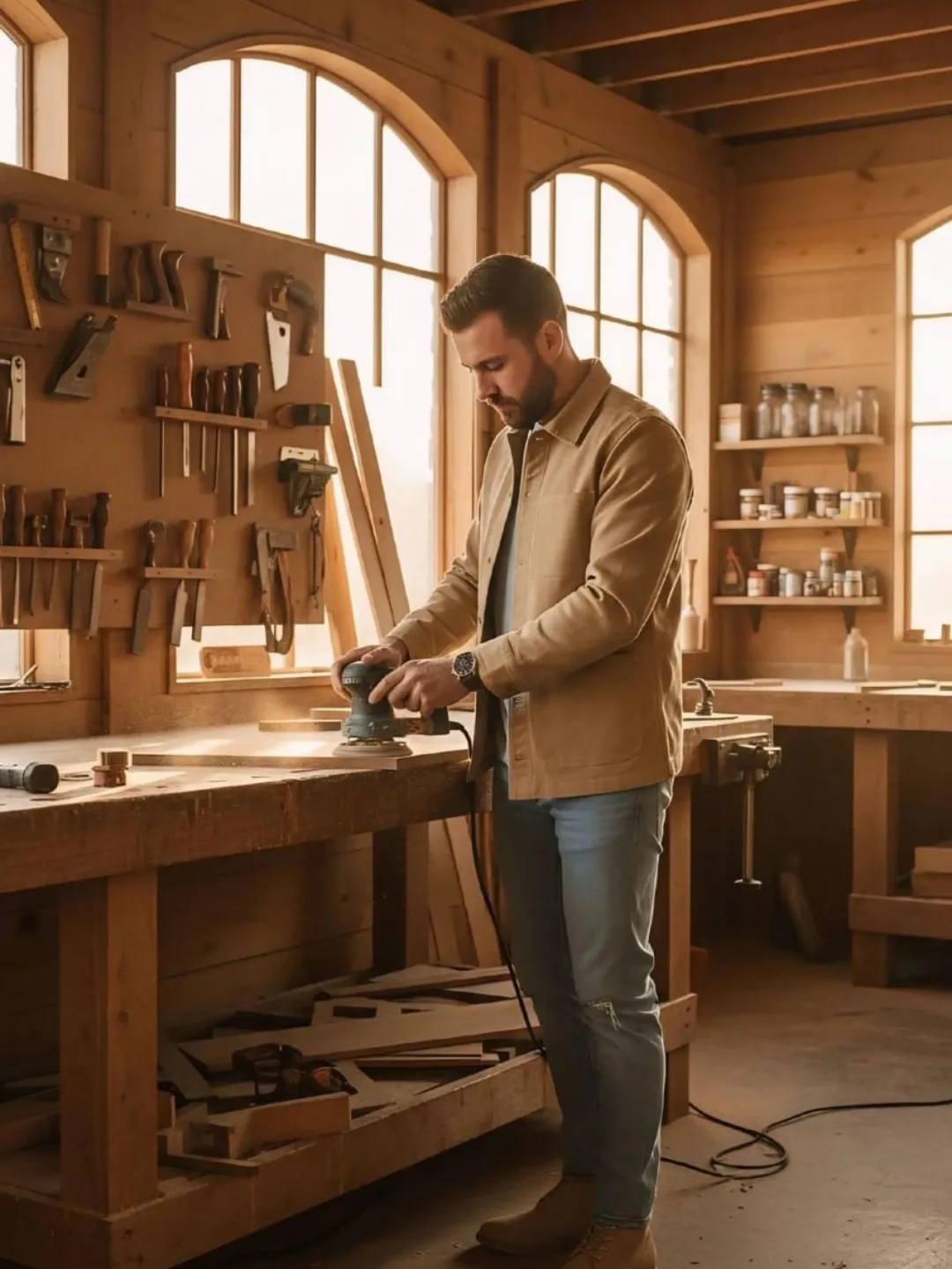
The lesson here is that light denim can work in winter if the rest of the outfit has enough texture and weight. The tan jacket and boots make the outfit feel seasonal. The denim keeps it casual.
Use this formula when black jeans feel too harsh:
Fit matters. The jacket should sit cleanly on the shoulder and stop around the upper hip. The jeans should be straight or slim-straight, not skin-tight. Boots already add bulk, so the trouser opening needs enough room to sit naturally above them.
If you struggle with denim fit, read How Should Jeans Fit Men before copying this look.
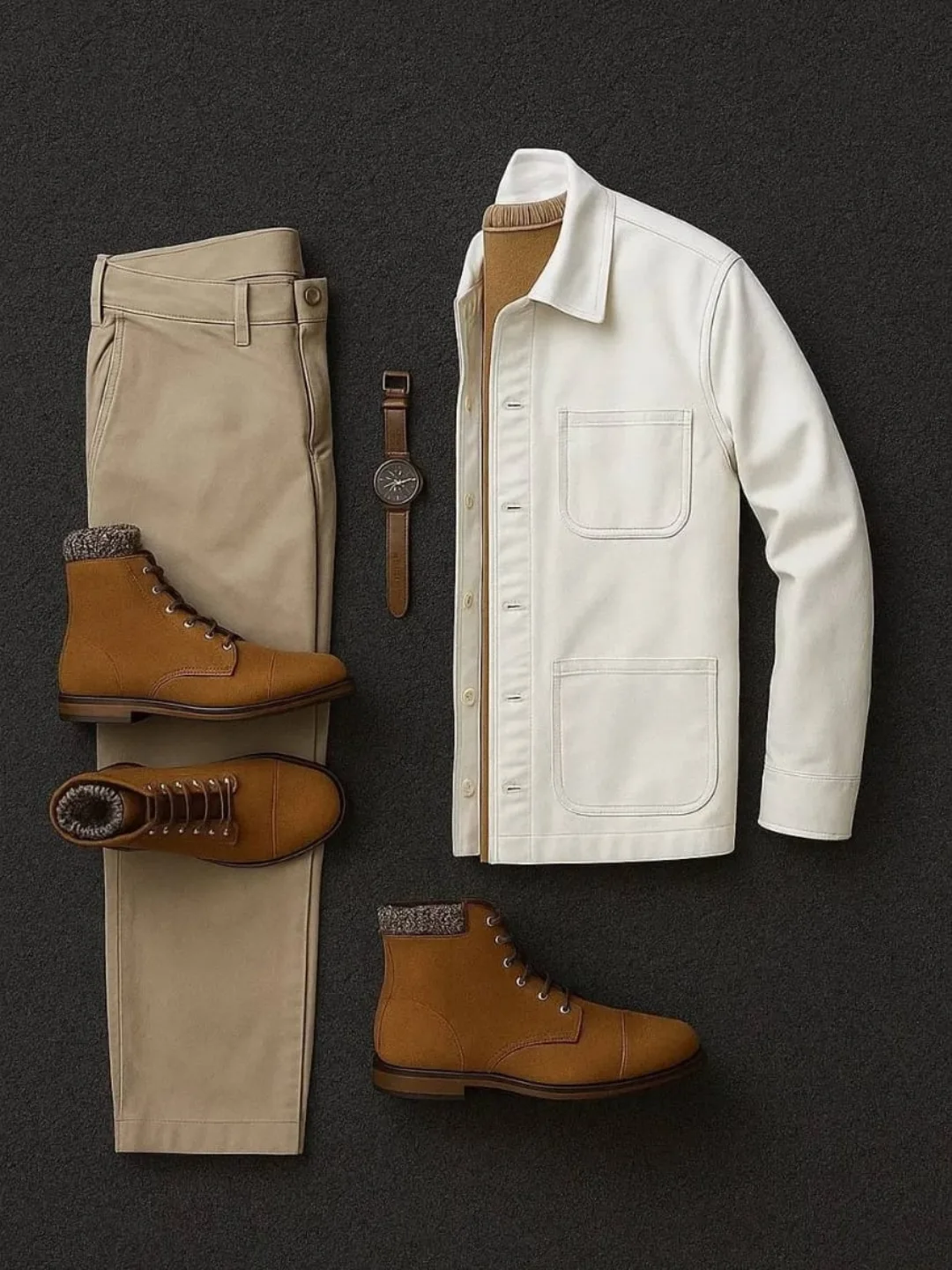
Light winter outfits look expensive when they are controlled. They look weak when the colours are almost right but the textures are flat.
This image uses cream, beige, camel and tan. The boots are slightly darker than the trousers and jacket, which is important. If every piece is the exact same light shade, the outfit can look washed out. The darker boots anchor it.

On the worn version, the cream jacket is paired with a camel/tan layer and tan trousers. The outfit feels creative-office appropriate. It is relaxed, but still neat. The watch and boots make it feel finished.
Copy it like this:
This is not for muddy weather or rough errands. It is best for daytime plans, cafés, studios, brunch, design offices and clean city settings.
The practical rule: if you wear light colours in winter, add texture and one darker anchor. That anchor can be boots, a belt, a watch strap or a darker knit.
For broader colour pairing help, use Men Color Matching Clothes.
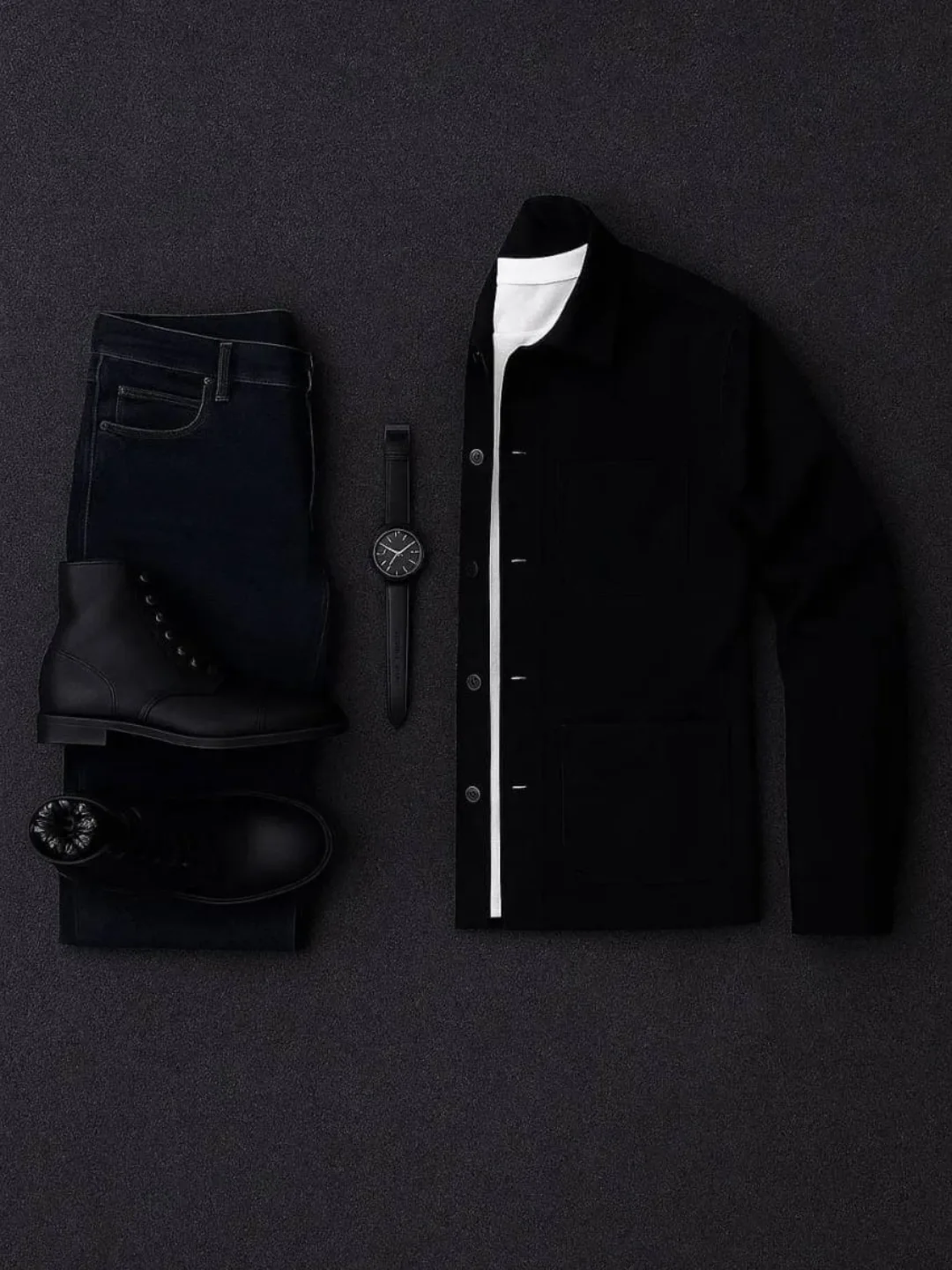
All black is easy. Good all black is harder.
The flat lay gives the important correction: the white top creates a break. Without that white line, the black jacket, black jeans and black boots could become one heavy block. The white layer adds contrast and draws attention upward.
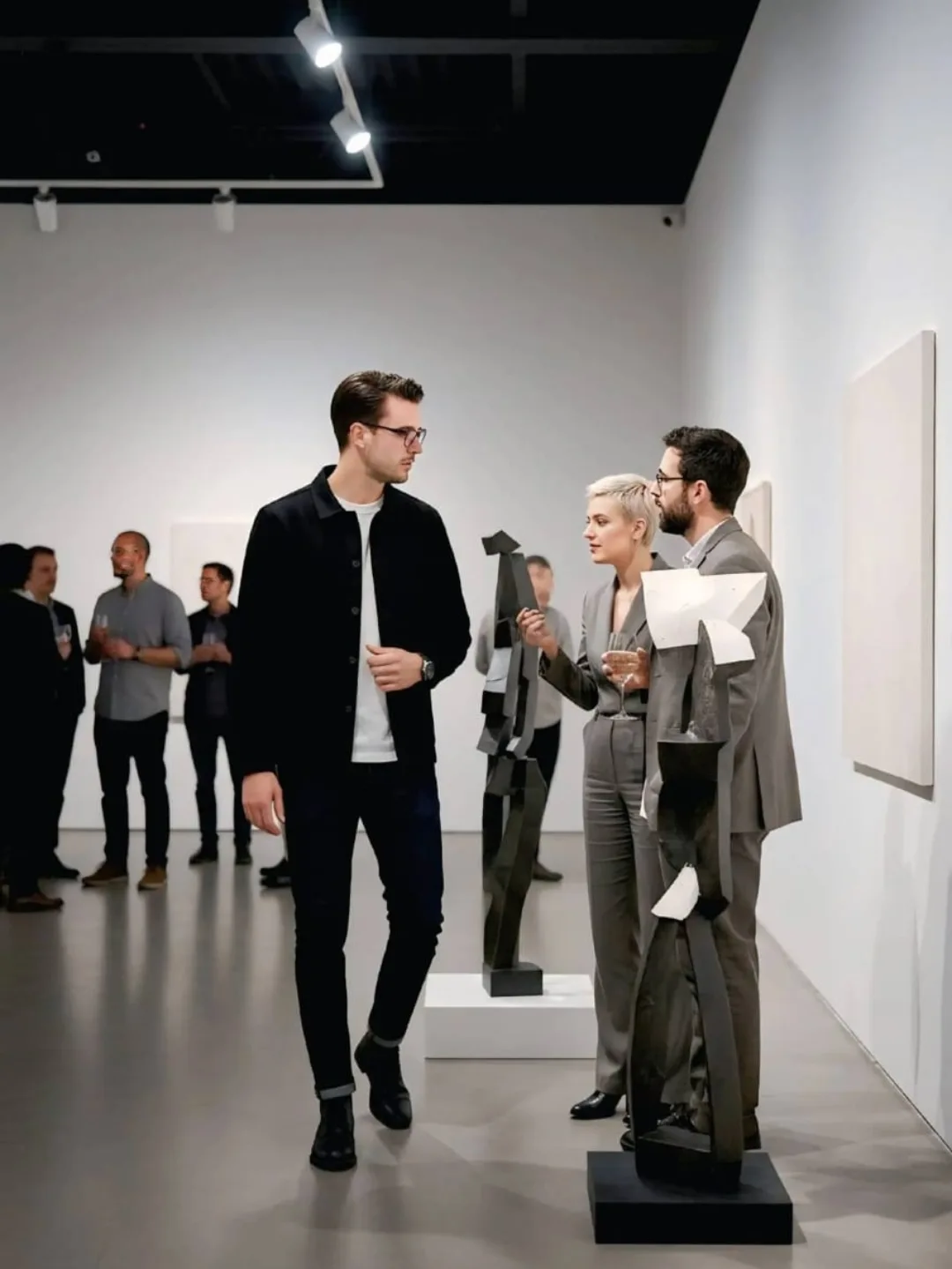
The worn image shows a clean gallery or evening setting. The outfit is simple: black jacket, white T-shirt, dark jeans, black boots, glasses and a watch. The jeans are cuffed slightly above the boots, which gives the lower half a cleaner line.
Use this for date night, gallery nights, casual drinks, dinner or evening city plans.
The rule: if you wear mostly black, pay attention to fit and contrast. Black hides details, so shape matters more. Your jacket should not balloon. Your jeans should not stack heavily over the boots. Your shoes must be clean, because scuffed black shoes are still visible.
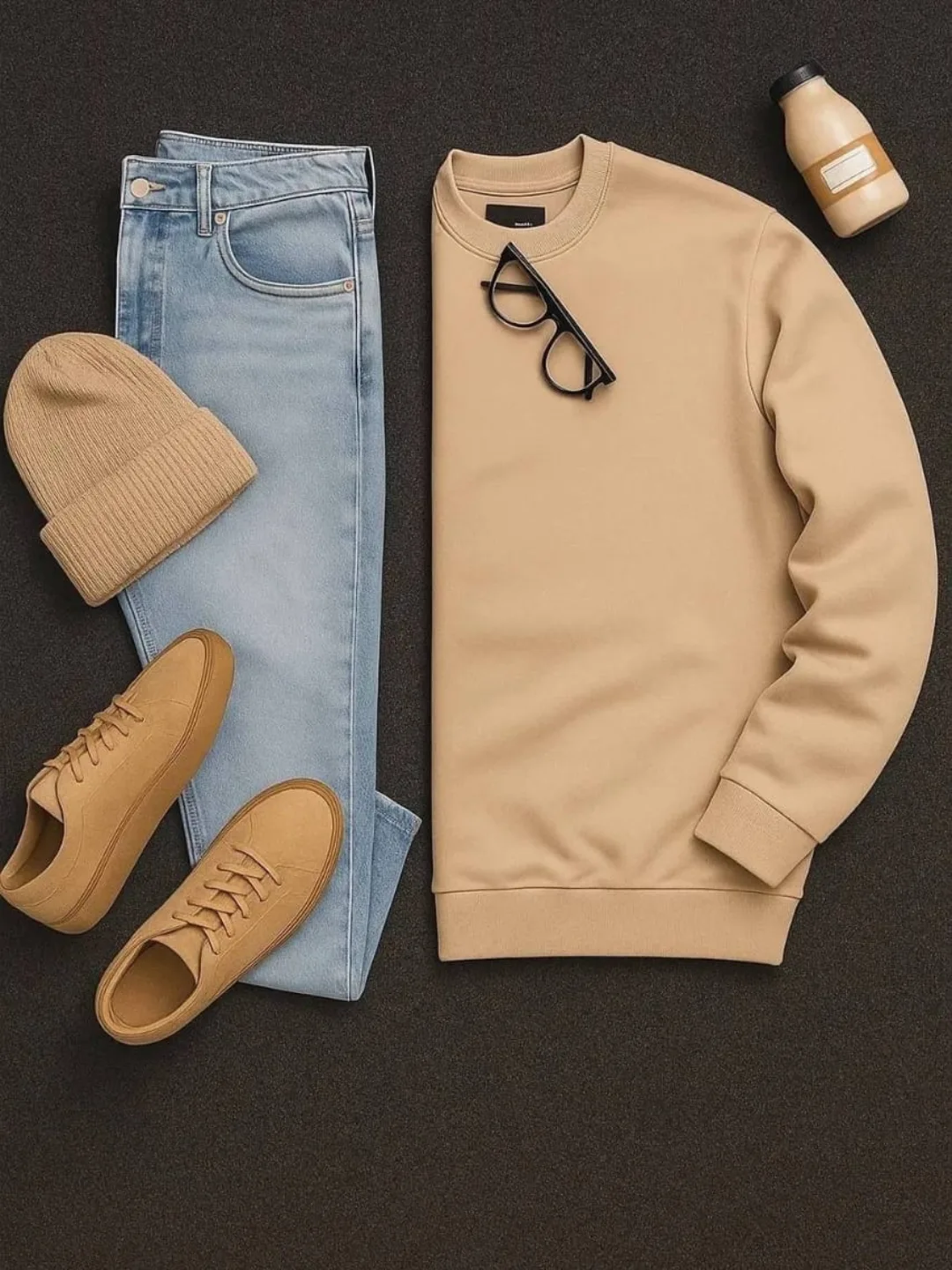
Not every winter outfit needs a jacket as the main idea. The beige sweatshirt look is casual but planned. The flat lay repeats beige in the sweatshirt, beanie and sneakers. The light denim keeps it relaxed. The black glasses give a small contrast point.
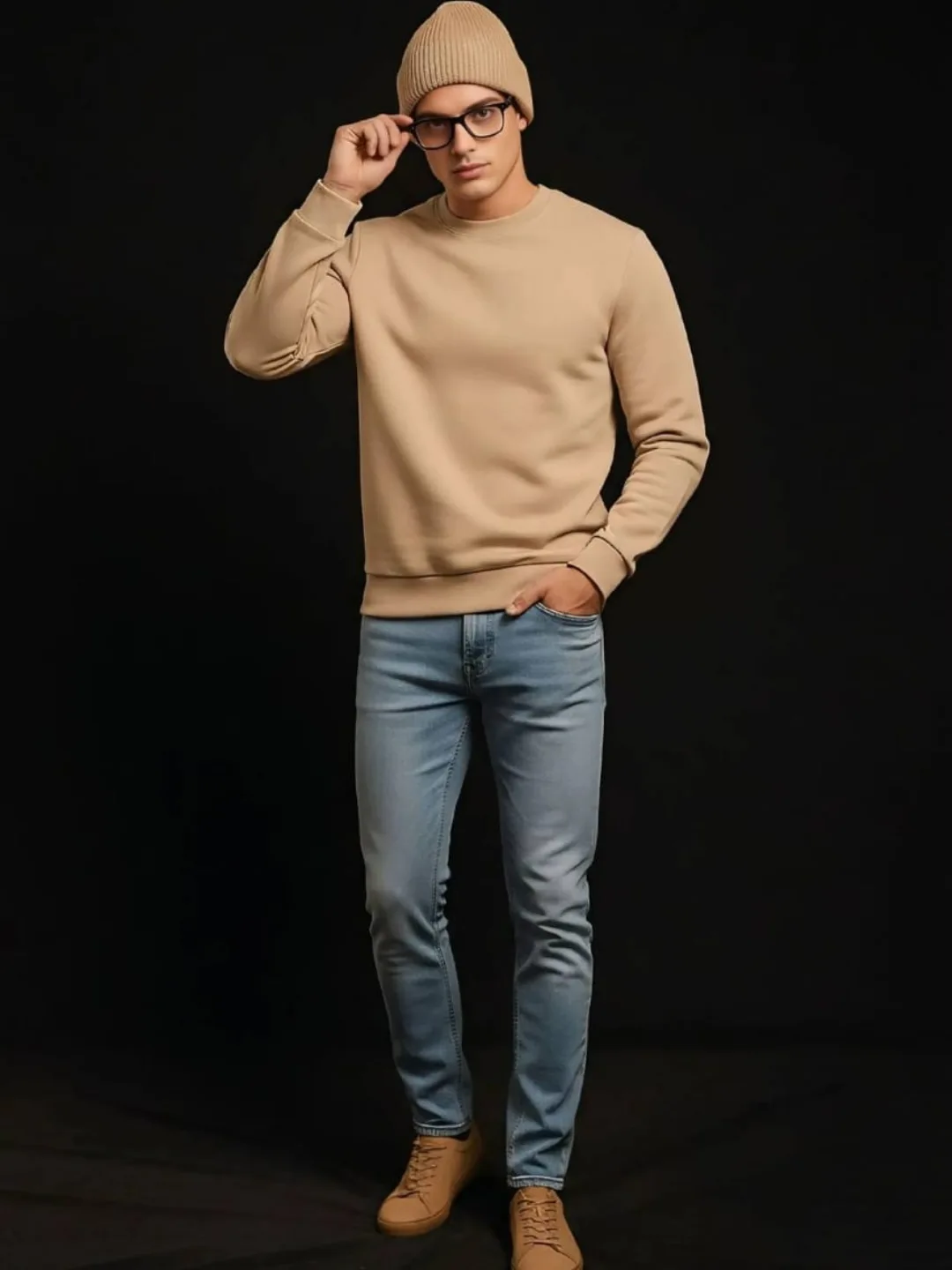
The worn image shows the same lesson clearly: casual can still be styled. A sweatshirt, jeans and sneakers is basic. But when the hat and shoes relate to the sweatshirt, the outfit looks intentional.
This is the outfit for errands, campus, airport travel, coffee, low-key weekends and relaxed meetups.
Just remember the grooming rule: simple casual outfits expose mess faster. If your sweatshirt is wrinkled, your sneakers are dirty, or your beanie is stretched out, the outfit loses the clean effect.
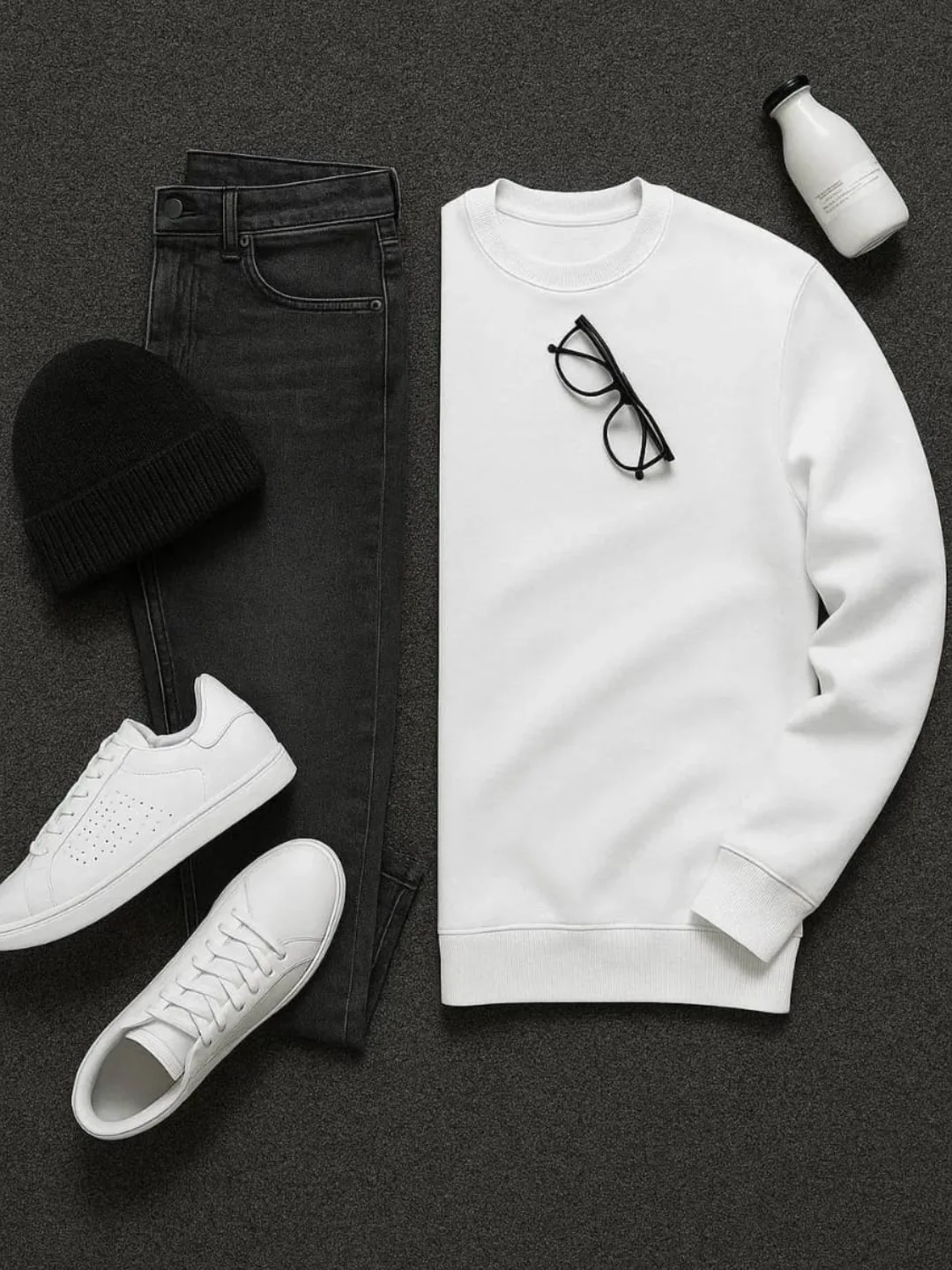
The final image is the simplest formula in the carousel:
This is a good starter outfit for men who overthink colour. It is black and white, but it does not feel boring because the colours repeat. White appears in the top and sneakers. Black appears in the jeans, beanie and glasses.
The main warning is maintenance. White sweatshirts and white sneakers only look clean when they are actually clean. If they are yellowed, stained or badly creased, the whole outfit drops.
Use this when you want a low-effort casual winter look that still feels sharp.
The carousel uses two footwear lanes:
That is the correct split.
Boots make a jacket outfit feel grounded. Sneakers make a sweatshirt outfit feel relaxed. Problems happen when men reverse the mood without intention: thin sneakers under a heavy structured jacket, or bulky work boots under a soft minimal sweatshirt.
Accessories are quiet throughout the post. Watches, glasses and beanies appear, but nothing screams for attention. This is exactly how winter accessories should work. They should finish the outfit, not hijack it.
Wearing bulky layers with skinny jeans. The top half looks heavy and the bottom half looks weak. Choose slim-straight or straight trousers instead.
Letting boots and jacket fight. If your boots are rugged, your jacket should have some weight too. If your jacket is sleek, your boots should be cleaner.
Using too many winter colours at once. Burgundy, tan, cream, black and beige all work. But one outfit should usually have one main colour story.
Ignoring the trouser break. Jeans or chinos should sit cleanly over boots. Heavy stacking makes the whole outfit look unfinished.
Forgetting grooming. Winter layers do not hide messy hair, dirty shoes, overgrown nails or a tired beanie. If anything, heavier clothes need cleaner grooming.
For grooming basics, connect this with Men's Grooming Routine.
If you are building this wardrobe, buy in this order:
Affiliate disclosure: if this article later includes product links, Men Fashion Sense may earn a commission. Only choose products that solve the outfit problem: clean boots, structured layers, better denim, or simple winter accessories.
Do not buy five jackets before your jeans and shoes are fixed. Footwear and trouser fit decide whether the winter layer looks sharp.
Build this outfit idea into a stronger wardrobe by reading the foundation guides: start with the men’s style basics, then use the men’s wardrobe essentials to decide what to buy first, and check the smart casual guide for men when the outfit needs to work for dinners, dates, office days or weekends.
Start with a crewneck sweatshirt, straight jeans and clean sneakers. If you want it sharper, add a structured overshirt or chore jacket and switch the sneakers to boots.
Use deeper neutrals and earth tones: black, charcoal, navy, cream, beige, camel, tan, burgundy, olive and brown. The carousel works because it repeats these colours instead of mixing random bright shades.
Yes. Cream, beige and light denim can work in winter when the fabrics have enough weight and the shoes anchor the outfit. Tan or brown boots help light winter outfits feel grounded.
Both can work. The key is a clean break. Avoid heavy stacking. Slim-straight jeans can sit over the boot, while darker denim can be cuffed slightly for a sharper evening look.
Repeat one colour. If you wear a beige sweatshirt, try tan sneakers or a beige beanie. If you wear a white sweatshirt, keep the sneakers white and use black denim for contrast.
Winter style is not about piling on clothes. It is about controlled layers.
Pick one main layer. Match the weight with the right trousers and shoes. Repeat colours through boots, beanies, watches or sneakers. Keep the fit clean. Keep the grooming clean.
Save this guide before your next winter shopping trip, and send it to a friend who still thinks a random hoodie under a random jacket is a winter outfit.