White Shirt and Dark Trousers for Men: The Outfit Formula That Rarely Fails
Learn how to wear a white shirt with dark trousers without looking generic: fit, contrast, tuck, belt, shoes and four practical outfit formulas.
White Shirt and Dark Trousers for Men: The Outfit Formula That Rarely Fails
A white shirt and dark trousers should be the easiest outfit in a man's wardrobe. Yet it often looks like a work uniform, a last-minute wedding outfit or something assembled because nothing else was clean.
The colours are not the problem. The outfit fails when the collar collapses, the shirt billows above the waistband, the trousers fit poorly or the accessories compete for attention.
The fix is simple: use contrast as the foundation, then let fit and finishing make it look intentional.
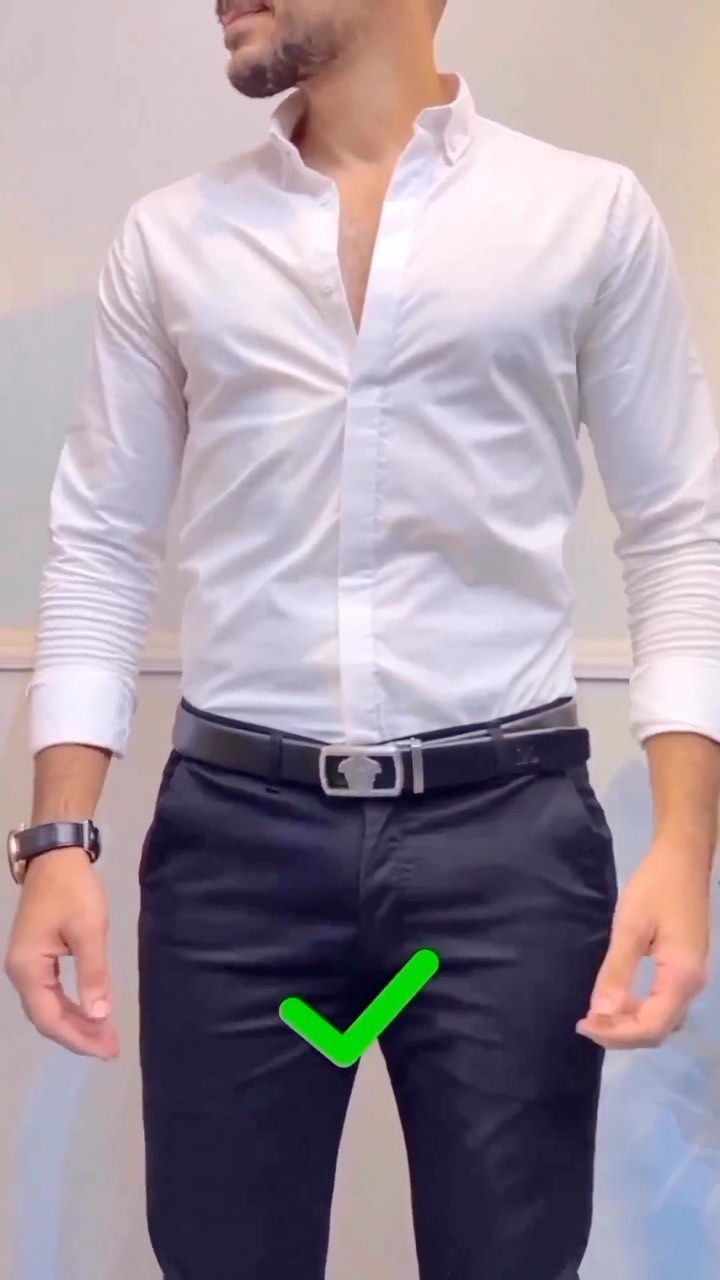
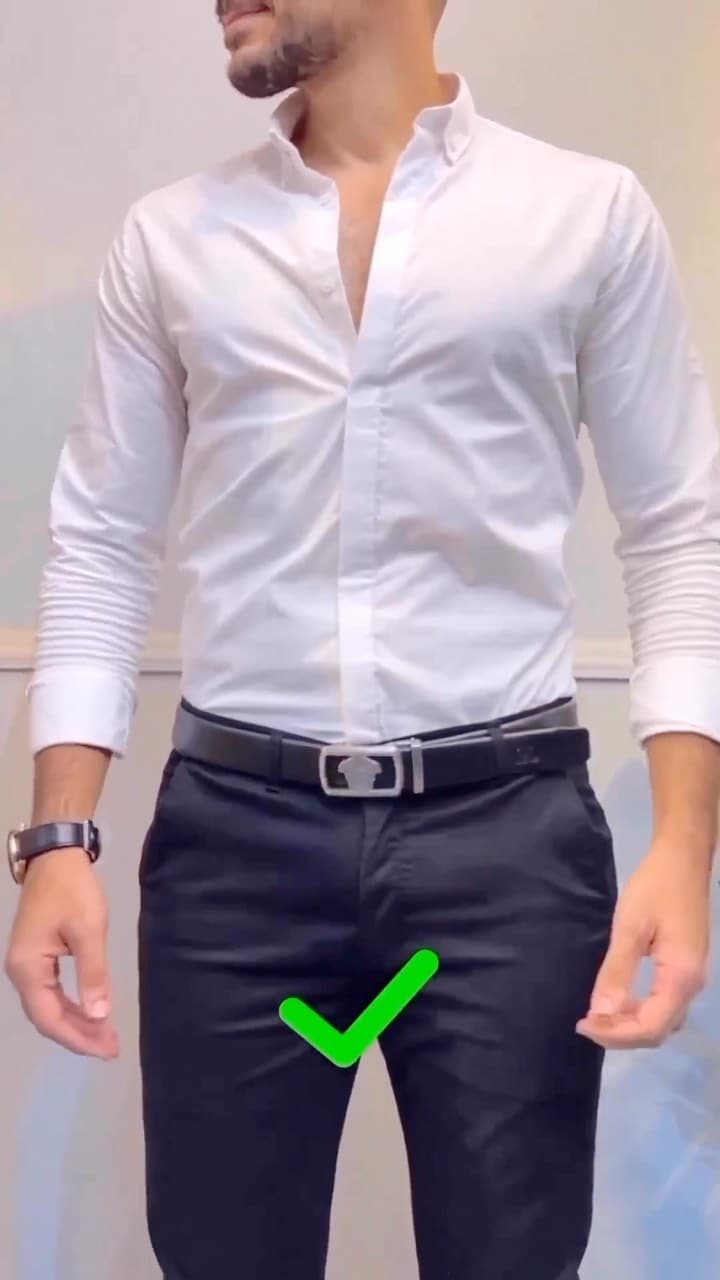
This formula works because it creates a clear visual order. The white shirt brings light toward your face. The dark trousers anchor the lower half. A dark belt connects the two without adding another colour. Nothing is fighting for attention.
Why this combination works
White and dark navy, charcoal or black create strong contrast. That gives the outfit shape even when every piece is plain.
It also gives you flexibility. Change only the shoes and one layer, and the same base can move between four settings:
- Brown loafers and rolled sleeves for a relaxed lunch
- Dark leather shoes and a blazer for the office
- Clean minimal sneakers for smart casual
- Black dress shoes and a tie for a formal event
That is why this outfit belongs in a functional wardrobe. It does not depend on a trend, a logo or an unusual colour. It depends on getting ordinary pieces right.
If colour combinations still feel random, start with our men's colour matching guide. It explains why high-contrast pairs feel sharper and how to soften them when needed.
Start with the right white shirt
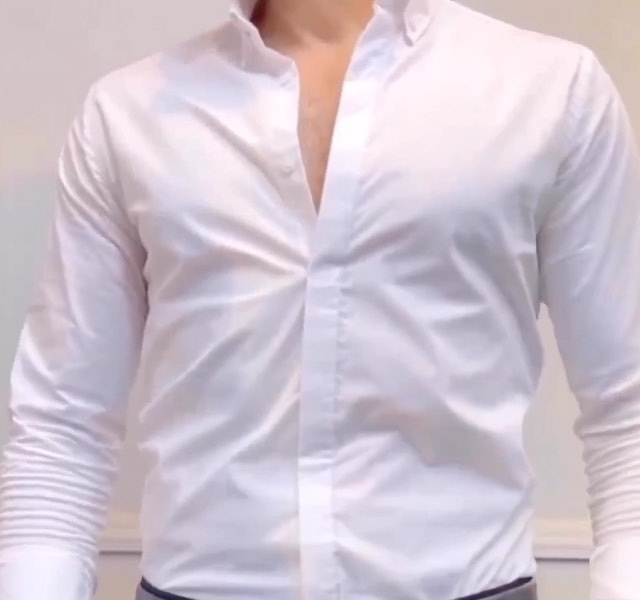
Not every white shirt does the same job. Choose the shirt for the room, not just the colour.
For the office
Use a crisp poplin or twill shirt with a structured collar. The collar points should sit flat, and the placket should stay clean rather than twisting. Keep the sleeves buttoned unless the workplace is genuinely relaxed.
For smart casual
An Oxford-cloth button-down is easier. The fabric has more texture, the collar feels less formal and the shirt works with loafers, chinos or clean sneakers. You can open one or two buttons, but the collar should still frame your neck.
For an evening event
Choose a smooth shirt with a firm collar and minimal visible texture. If you add a blazer, make sure the shirt collar stays under the jacket collar rather than escaping over it.
The fit checks that matter
Before thinking about shoes or watches, check these five points:
- Shoulders: the seam ends where your shoulder ends.
- Collar: you can fit one or two fingers inside without a large gap.
- Chest: the buttons lie flat without pulling lines.
- Sleeves: the cuff reaches the wrist bone when buttoned.
- Body: enough room to sit and reach forward, but not enough fabric to create a large balloon above the waistband.
For a complete fitting-room test, use the shirt fit checklist for men. A basic colour combination looks expensive when the fit is clean, and careless when it is not.
Choose dark trousers with enough structure
“Dark trousers” can mean navy, charcoal or black. Each creates a slightly different mood.
- Navy: the most versatile. It looks professional without becoming severe and pairs naturally with brown or black footwear.
- Charcoal: softer than black and excellent for business settings. It also gives a white shirt a more mature, tailored feel.
- Black: the sharpest contrast. Best for evening, hospitality, formal settings or a very minimal look. It can feel uniform-like if every accessory is equally severe.
The trousers should sit securely at your natural waist without a belt doing all the work. The front should remain smooth. The seat should not sag, and the thigh should allow you to sit without pulling across the pockets.
At the hem, aim for little or no break with a tapered trouser, or a light break with a more traditional straight cut. Our guide to how trousers should fit covers the waist, rise, seat, thigh, taper and hem in six checks.
Make the tuck look deliberate
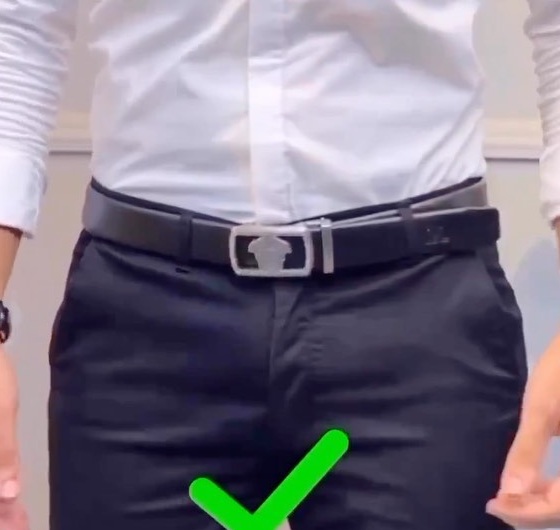
The tuck is the centre of this outfit. Because the colours are simple, messy fabric around the waist becomes obvious.
Use this method:
- Put on the trousers but leave them open.
- Pull the shirt down fully around your body.
- Fasten the trousers over the shirt.
- Raise both arms once, then lower them.
- Smooth only the excess fabric at the sides and back.
That small amount of movement creates enough ease to sit without producing a large fabric bubble.
If the shirt still gathers heavily, the body may be too wide or too long. Do not keep tightening your belt. Have the sides shaped by a tailor, or buy a cut designed for your torso.
A casual shirt can be left untucked only when the hem is built for it. It should usually finish around mid-fly, not cover most of your seat. For the practical differences between a full tuck, military tuck and casual untucked hem, read how to tuck a shirt properly.
Keep the belt quiet
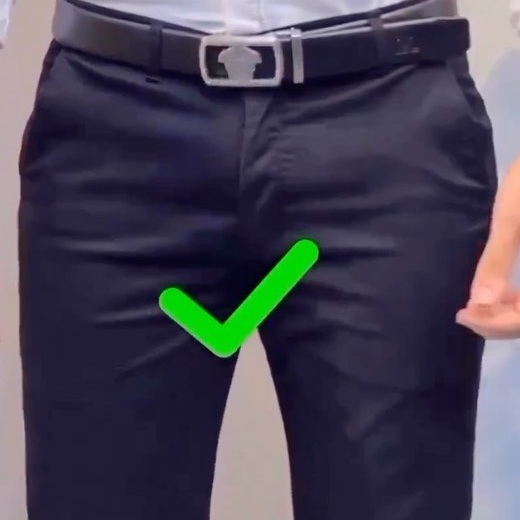
A belt is useful here, but it should not become the main event.
Choose a simple dark leather belt, roughly 30 to 35 millimetres wide, with a restrained buckle. The strap should pass through the first keeper without leaving a long tail. Avoid oversized plaques, loud monograms and highly polished novelty buckles.
The basic matching rule is practical rather than absolute:
- Black shoes: black belt
- Dark brown shoes: dark brown belt
- Minimal white sneakers: a dark belt that relates to the trousers is usually cleaner than trying to match the shoes
Metal does not need to match perfectly, but it should feel related. A silver watch case beside a silver belt buckle looks controlled. Mixing bright gold, silver and oversized hardware can make a simple outfit feel busy.
Four ways to wear the formula
1. Office-ready
Wear a crisp white shirt, navy trousers, a dark brown belt and dark brown Derby shoes. Add a navy or mid-grey blazer if the room requires it. Keep the sleeves buttoned and the shirt fully tucked.
This version works for meetings, presentations and business-casual offices. If the dress code is unclear, the smart casual guide for men will help you judge how much tailoring the room expects.
2. Wedding or formal event
Use a white dress shirt, charcoal trousers, black belt and black cap-toe shoes. Add a dark jacket and a tie appropriate to the event. Here, every detail needs more precision: collar, cuff length, trouser break and polished footwear.
Do not wear the shirt open too far. Formality comes from restraint.
3. Dinner or date
Choose a textured white Oxford, dark navy trousers and dark loafers. Open the collar, roll the sleeves neatly to the forearm and add one watch. This is relaxed without looking unfinished.
A dark brown belt softens the contrast. Black makes it sharper. Pick one direction and repeat it through the footwear.
4. Clean smart casual
Pair a white Oxford with charcoal chinos and minimal leather sneakers. Keep the trousers tapered but not tight. The sneakers should be clean, low-profile and free of loud colour blocking.
If the shirt is tucked, wear a belt. If it is untucked, verify that the hem is short enough and that the shirt still has shape through the sides.
How to stop it looking like a uniform
A uniform effect appears when every piece is generic and there is no variation in texture or proportion. You do not need a statement item to fix it.
Use one of these changes:
- Swap smooth dress trousers for brushed chinos
- Choose an Oxford shirt instead of shiny poplin
- Add a textured blazer
- Use dark brown rather than black leather
- Roll the sleeves evenly for a relaxed setting
- Add one restrained watch
Choose one or two. Using all six at once defeats the simplicity that makes the formula useful.
Shoes decide the final dress code
The shirt and trousers create the base. Shoes tell people where you are going.
- Black Oxfords or cap-toe Derbies: formal and business-ready
- Dark brown Derbies: professional but slightly softer
- Penny loafers: polished smart casual
- Minimal leather sneakers: casual, modern and clean
- Suede loafers: warm-weather or relaxed evening style
Avoid running shoes with formal trousers, heavily distressed sneakers with a crisp dress shirt, or bulky soles that overwhelm a tapered leg. If your wardrobe needs a footwear system, see the essential shoes every man should own.
Common mistakes
Choosing a transparent white shirt
Under bright light, thin white fabric can reveal every layer underneath. Use a skin-tone undershirt rather than a bright white one, or choose a denser weave.
Wearing trousers that are too tight
Pull lines at the pockets and horizontal creases across the thigh mean you need more room. A clean silhouette is not the same as a tight silhouette.
Letting the collar collapse
A soft, flattened collar makes the face and neckline look unfinished. Choose a collar with enough structure for the outfit's formality.
Over-rolling the sleeves
Two or three even folds to the mid-forearm look deliberate. A tight roll pushed above the elbow can distort the sleeve and feel careless unless you are actually working.
Adding too many focal points
A white shirt and dark trousers are valuable because they are quiet. Loud buckle, loud watch, loud shoes and loud fragrance do not make the outfit more personal. They make it less controlled.
A 30-second mirror check
Before leaving, ask:
- Are the shoulder seams in the right place?
- Is the collar clean and standing properly?
- Are there pulling lines at the shirt buttons?
- Is the tuck smooth from the front and sides?
- Do the trousers sit without sagging or pulling?
- Does the belt relate to the shoes?
- Is there only one visible accessory focus?
- Are the shoes appropriate for the room?
If those answers are yes, stop adjusting. The outfit is done.
FAQ
Can I wear a white shirt with black trousers?
Yes. It is the highest-contrast version and works especially well for evening or formal settings. Use clean fit and restrained accessories so it feels intentional rather than like a service uniform.
Are navy or black trousers more versatile with a white shirt?
Navy is usually more versatile because it works with both brown and black shoes and feels less severe during the day. Black is sharper for evening and formal use.
Should I tuck in a white shirt with dark trousers?
Tuck it for business, formal events and any shirt with a long curved hem. Leave it untucked only in casual settings when the shirt is designed to end around mid-fly.
What belt should I wear with a white shirt and dark trousers?
Match the belt to the formality and general colour of the shoes. Black with black shoes, dark brown with dark brown shoes, and a quiet dark belt with minimal sneakers.
Can I wear white sneakers with this outfit?
Yes, with an Oxford shirt and chinos or casual tailored trousers. Choose a clean, minimal leather pair rather than a technical running shoe.
How do I make a white shirt outfit look less basic?
Improve texture, fit or footwear rather than adding multiple statement items. An Oxford weave, brushed trousers, suede loafers or a textured blazer is enough.
Bottom line
A white shirt and dark trousers do not need to be interesting. They need to be correct. Choose the shirt for the room, get the trousers fitting cleanly, smooth the tuck, keep the belt restrained and let the shoes set the dress code.
Save this formula for the next time you need to look sharp without overthinking what to wear.