Loading...
Style guides, outfit breakdowns, and deals — curated weekly for the modern Pakistani man.
12,000+ subscribers · No spam · Unsubscribe anytime
How should trousers fit? Learn the correct trouser break, waist, rise, seat, thigh and hem width with a simple 6-point fitting-room check for men.
Most men buy trousers by waist size and hope the rest works out. Then the outfit feels off and they blame the shirt, the shoes or their body.
It is usually none of those. It is the trousers.
Trousers fit correctly when the waistband stays put without a belt fighting it, the seat is smooth, the thigh has room to move, and the hem falls with little or no break over your shoes. Everything else is preference.
Here is how to check all six points in about ninety seconds, in the fitting room, before you pay.
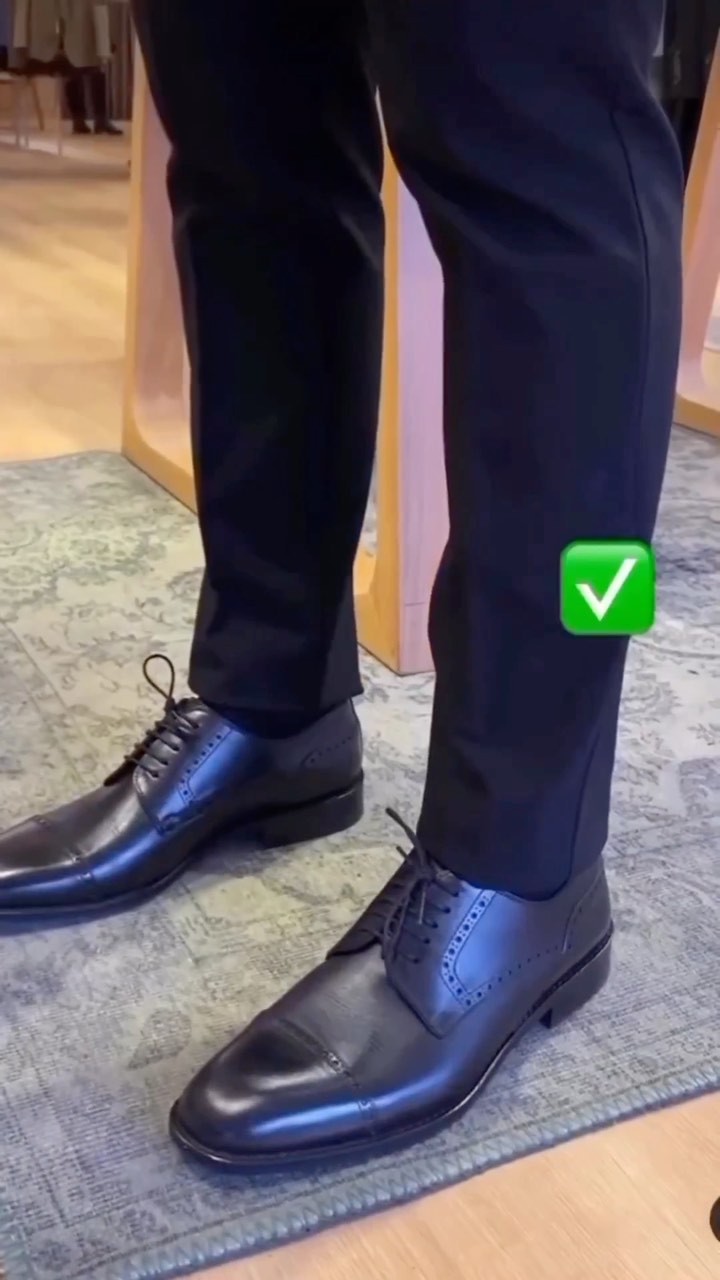
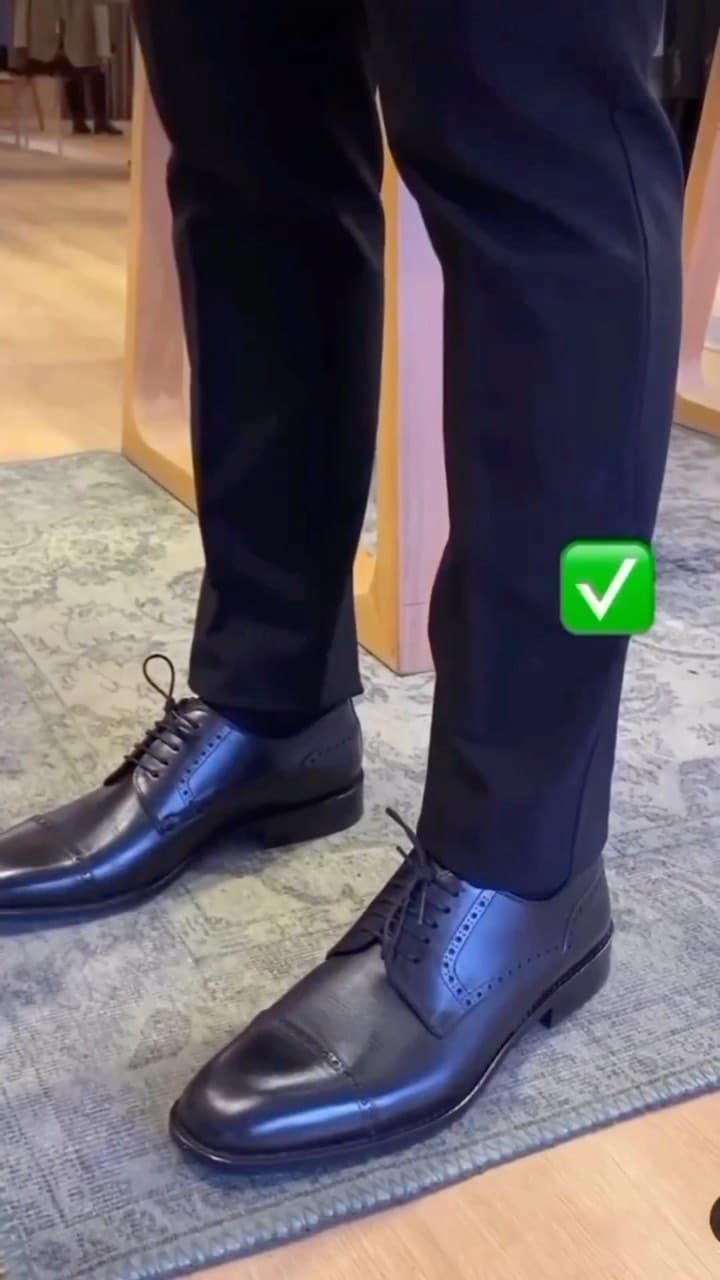
Look at where the fabric meets the shoe above. The hem falls straight down and stops at the top edge of the shoe. There is no fabric stacking on the laces, no horizontal folds gathering above the ankle, and no gap of bare leg.
That is a zero break, and it is the cleanest, most modern way to hem a tailored trouser.
The break is the fold that forms where the trouser hem hits the shoe. You get four options:
If you own one pair of tailored trousers and want them to work everywhere, ask the tailor for a slight break. If you want the look in the image above, ask for no break and bring the shoes you will actually wear.
One rule that saves money: always take your real shoes to the fitting or the alteration. Dress shoes, loafers, boots and sneakers all sit at different heights. A hem measured in flip-flops will be wrong in every pair you own.
Fasten the trousers and let go. The waistband should stay where you put it without a belt clamping it down.
Slide two fingers flat between the waistband and your shirt. Two fingers means comfortable. If you can fit a fist in, they are too big. If you cannot get one finger in, they are too tight and you will see pulling at the button.
Then sit down. If the waistband digs in hard or slides down your hips, that is the wrong size, not something a belt can fix.
A belt is a finishing detail. When the waistband gathers into visible bunches under the belt, the trousers are too large and need altering.
The rise is the distance from the crotch seam up to the waistband. It decides where your outfit divides.
If your trousers fit at the waist and the leg but the proportions still look wrong in the mirror, the rise is usually the reason. Try the same size in a different rise before you try a different size.
The crotch seam should sit close to your body without pressing into it. A seam hanging several centimetres below is a sagging silhouette; a seam pulling into you is a size too small.
Turn around and look at the back in the mirror. This is the check almost everyone skips.
The fabric should skim the seat with a smooth surface. Watch for:
Then squat slightly. If you hear the fabric strain or feel the seam bite, size up and have the waist taken in. Taking in a waist is one of the cheapest, most reliable alterations a tailor does.
Sit down and cross one leg. You should be able to do it without the fabric locking around your leg.
You want a clean line that follows the leg without gripping it. When the thigh is too tight, the front pockets flare open, and that is visible from across a room. When it is too loose, the trouser looks borrowed.
Men with more developed legs from sport or gym work should buy for the thigh and seat, then have the waist adjusted. That order costs less than trying to force the right waist size to accommodate the wrong thigh.
The taper is how much the leg narrows from thigh to hem. The hem opening is the width of the trouser at the ankle.
A useful test: the hem opening should be wide enough to sit over the shoe without hugging it, and narrow enough that it does not flap when you walk. If the trouser flares out over the shoe like a small tent, ask for a taper from the knee down. If the trouser grips your calf, you need a wider cut.
Wider legs are not a mistake. A relaxed straight leg with a slight break is a legitimate, current silhouette. What matters is that the width looks chosen rather than accidental — consistent from knee to hem, and matched to your shoes.
Length and break are related but not identical. Length is the raw measurement; break is what the length does when it meets your shoe.
Stand naturally in your shoes, arms down, weight on both feet. Do not stand at attention and do not slouch. Then look at the front and the back.
The front should show your chosen break. The back hem should sit slightly lower than the front, roughly at the top of the shoe heel. If the back hem drags on the floor, it will fray within a season.
Ask a tailor to hem with the shoes present, and to confirm the number in centimetres so you can repeat it on your next pair.
The image above pairs black trousers with a black cap-toe Derby — an open-laced leather dress shoe with light perforation along the toe cap. That is a formal-leaning shoe, and it is why the clean no-break hem reads correctly there.
Change the shoe and you change the ideal hem:
If you are still building your shoe rotation, start with the men's shoes every man needs guide and hem your trousers to the pair you wear most.
Socks matter here too. With dark tailored trousers and dark shoes, dark socks long enough to stay up when you sit keep the leg line unbroken. A flash of bare shin between formal trousers and leather shoes drops the formality of the whole outfit.
The six checks apply to all of them, but the tolerances differ.
Suit and dress trousers carry the least margin for error. The fabric is smooth and shows every pull line, so waist, seat and hem should all be close to exact.
Chinos are more forgiving. Cotton relaxes as you wear it and shrinks slightly in the wash, so buy them close to correct rather than tight, and allow for the hem moving a little over the first few washes.
Jeans follow their own rules — denim stretches, rigid fabrics mould to you, and a small stack at the hem is normal in casual wear. Use the how should jeans fit guide for those.
For the full head-to-toe version of these checks, including shirts and jackets, see the how clothes should fit guide.
Alterations are the fastest upgrade available to most men, and they are cheaper than people assume. But they have limits.
Easy and cheap:
Harder or not worth it:
The practical takeaway: buy for the parts a tailor cannot change — rise, thigh and seat — and let the tailor handle waist, taper and hem.
Budget a small amount for alterations every time you buy trousers. Two well-altered pairs beat five that almost fit. If you are rebuilding from scratch, the men's wardrobe essentials guide shows which trousers to buy first.
Run this every single time before you pay:
If a pair fails on rise, thigh or seat, put it back. If it only fails on waist, taper or hem, buy it and take it to a tailor.
How long should trousers be? Long enough that the front hem meets the top of your shoe with either no fold or one soft fold, and the back hem sits around the top of the shoe heel without touching the floor.
What is a trouser break? It is the fold that forms where the hem meets your shoe. No break means the hem just touches. A slight break shows one soft crease. A full break shows a clear fold resting on the shoe.
Which break should I choose? A slight break is the safest default for one versatile pair. Choose no break for slimmer, sharper tailoring worn with dress shoes or loafers. Choose a full break for wider legs and heavier fabrics.
Should trousers touch my shoes? Yes, at the front they should reach the top of the shoe. A visible gap of bare leg while standing means they are too short for tailored wear.
How tight should the waist be? You should be able to slide two flat fingers between the waistband and your body, and it should stay up without a belt pulling it tight.
Can a tailor make trousers longer? Only if there is unused fabric in the hem allowance, and even then a pressing line may remain. This is why buying slightly long and hemming down is safer than buying short.
How much room should trousers have in the thigh? Enough to cross your legs and sit comfortably, with no horizontal pull lines and no gaping at the front pockets.
Do trousers and jeans follow the same fit rules? The six checks are the same, but denim stretches and moulds with wear, so jeans tolerate a snugger initial fit and a small hem stack that would look wrong on dress trousers.
Save this before your next shopping trip. Run the six checks on the trousers already hanging in your wardrobe tonight — you will find out in ten minutes which pairs deserve a tailor and which ones were never going to work.
Build a reliable men’s wardrobe with 20 essential pieces: shirts, jeans, chinos, shoes, outerwear, accessories, and grooming basics.