Loading...
Style guides, outfit breakdowns, and deals — curated weekly for the modern Pakistani man.
12,000+ subscribers · No spam · Unsubscribe anytime
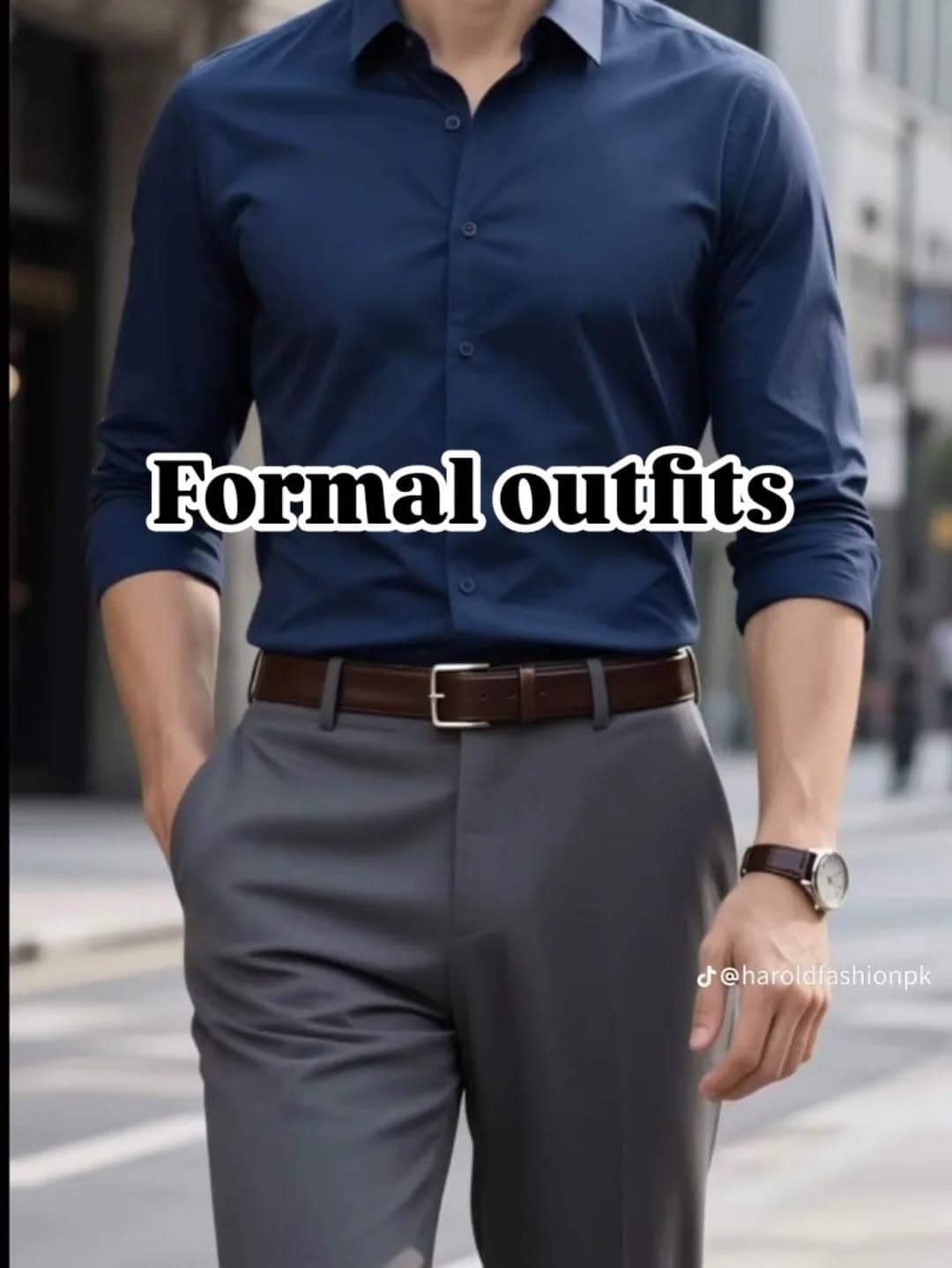
Use navy, grey and brown leather to build a formal outfit that works for offices, meetings and dressier events without relying on loud pieces.
Most men do not need louder clothes. They need cleaner decisions. This outfit example gives us the visual starting point; this article turns it into practical rules you can use today. The advice below is based first on what is actually visible in the outfit image, then on the public caption text. Where the image does not show a detail, I will say that clearly instead of inventing it.
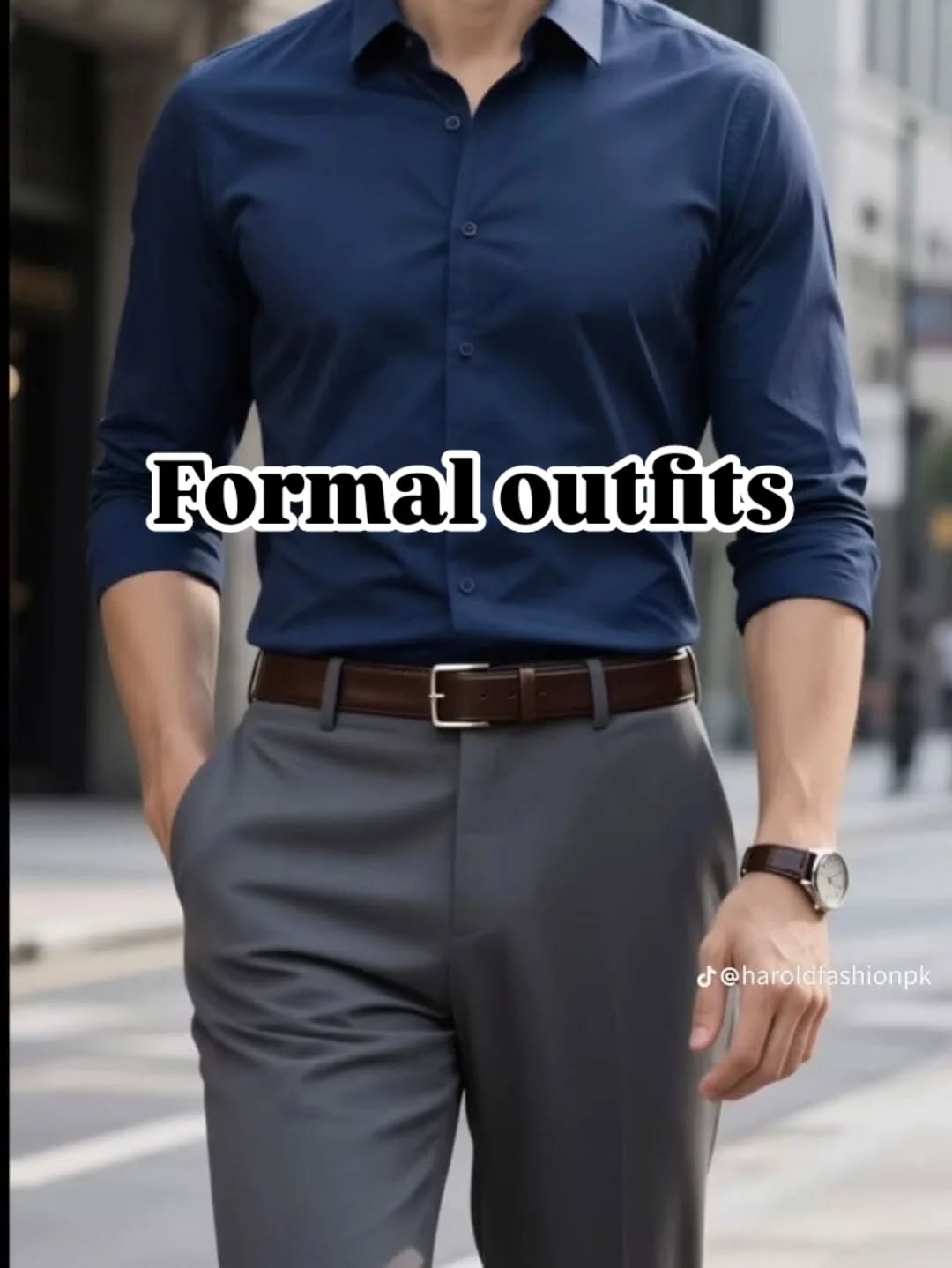
The image has large text 'Formal outfits' and shows a cropped torso in a navy button-up shirt tucked into grey tailored trousers with a brown leather belt and a watch with a brown strap. Shoes are not visible, and the promised navy-suit caption goes beyond what the image shows. The visible lesson is formal colour control: navy and grey create a professional base, while brown leather softens the look without making it casual.
The image text says "Formal outfits." Visually, the image shows a navy button-up shirt tucked into grey tailored trousers, finished with a brown leather belt and a brown-strap watch. The caption mentions a navy suit, white shirt and brown leather, but the outfit image is a more stripped-down formal or business-formal base. So the article uses the image honestly: navy, grey and brown leather are the lesson.
Here is the simple check: does the outfit look clean from five feet away, and does it still make sense up close? If yes, you are on the right track. If not, fix the fit, the shoes, or the colour count before buying anything new.
Formal style is built on controlled contrast. Navy gives depth. Grey gives professionalism. Brown leather adds warmth. This combination is useful because it looks serious without becoming as severe as black and white. It works for office days, client meetings, dinner after work and many semi-formal events.
Here is the simple check: does the outfit look clean from five feet away, and does it still make sense up close? If yes, you are on the right track. If not, fix the fit, the shoes, or the colour count before buying anything new.
Start with tailored grey trousers. Add a navy dress shirt or a navy suit jacket with a white shirt if the event is more formal. Choose a brown belt if brown shoes are part of the outfit. Keep the shirt tucked cleanly. The image shows the belt line clearly, which is a reminder: when you tuck a shirt, your belt becomes part of the outfit, not an afterthought.
Here is the simple check: does the outfit look clean from five feet away, and does it still make sense up close? If yes, you are on the right track. If not, fix the fit, the shoes, or the colour count before buying anything new.
If the invitation says formal, wedding, business formal or ceremony, a shirt-and-trouser combination may not be enough. Move to a full navy suit, white dress shirt and polished brown or black leather shoes. If the room is business casual, the navy shirt and grey trouser idea can be enough. Dress for the room, not for the caption.
Here is the simple check: does the outfit look clean from five feet away, and does it still make sense up close? If yes, you are on the right track. If not, fix the fit, the shoes, or the colour count before buying anything new.
The shirt should not pull hard across the chest. The shoulder seams should sit near the shoulder edge. The trousers should sit cleanly at the waist and avoid bunching around the belt. The watch should be slim enough to sit under a cuff. The image is cropped, so shoes are not visible; choose shoes based on formality: oxfords or derbies for formal, loafers for softer business casual.
Here is the simple check: does the outfit look clean from five feet away, and does it still make sense up close? If yes, you are on the right track. If not, fix the fit, the shoes, or the colour count before buying anything new.
Do not mix a formal top with casual distressed trousers. Do not use a wide casual belt with dress trousers. Do not wear a shiny oversized watch with a clean formal outfit. Do not rely on dark colours alone; fit and pressing matter. A navy shirt with wrinkles still looks careless. Formal dressing is not about being stiff. It is about removing distractions.
Here is the simple check: does the outfit look clean from five feet away, and does it still make sense up close? If yes, you are on the right track. If not, fix the fit, the shoes, or the colour count before buying anything new.
Use the outfit image as a guide, not a prison. If you are shorter, keep the contrast lower between top and bottom so the outfit does not cut you in half. Use trousers with a clean rise and avoid long, heavy layers that swallow the legs. If you are taller, you can use stronger contrast, a longer overlayer, or slightly heavier shoes because your frame can carry more visual weight. If you have a broader build, avoid clingy shirts and choose fabric with enough structure to skim the body instead of sticking to it.
Lifestyle matters too. A man who works in an office needs sharper shoes and cleaner trouser lines. A student or creative can keep the same colour idea but use sneakers, denim or a softer overshirt. A man who hates shopping should build around repeatable pieces: one dark top, one light trouser, one clean overlayer and one pair of shoes that can handle three different plans. That is how style becomes easy instead of another daily decision.
Before you leave the house, do the mirror test. Check shoulders, waist, trouser length, shoes, grooming and one accessory. If one piece is loud, keep the rest quiet. If everything is quiet, make sure texture or contrast gives the outfit enough shape. The goal is not to look like a model. The goal is to look like a man who understands the room and respects his own presentation.
Use this as a shopping checklist, not a reason to buy randomly. Look for one reliable top layer, one clean trouser, one pair of shoes that matches the formality, and one simple watch or accessory. If affiliate links are added later, disclose them near the first link and only recommend items that solve the reader's actual problem.
Before you copy the outfit idea, run it through a simple real-life check. First, ask whether the outfit matches the room. A clean casual outfit can work for coffee, shopping or a relaxed date, but it may need loafers, a tucked shirt or a sharper jacket for dinner, the office or a smarter event. Do not copy the photo blindly. Copy the level of polish.
Second, check the fit points you can control today. The shoulder seam should sit near your shoulder edge, the trouser waist should stay up without constant pulling, and the hem should not collapse heavily over the shoes. If the outfit image is a flat lay or a cropped image, do not guess the body fit from it. Use the image for colour, item choice and styling direction, then test the fit on your own body in a mirror.
Third, keep the colour story simple. Most Men Fashion Sense outfits work because one piece leads and the rest supports it. If the shirt is bold, keep the trousers quiet. If the trousers are light, keep shoes clean. If the outfit already has texture, avoid loud logos.
Finally, finish the look. Steam the shirt, clean the shoes, control the hair, trim the nails and choose one useful accessory. A watch, belt, sunglasses or simple bag is enough. The goal is not to look like you tried too hard. The goal is to look prepared.
Build this outfit idea into a stronger wardrobe by reading the foundation guides: start with the men’s style basics, then use the men’s wardrobe essentials to decide what to buy first, and check the smart casual guide for men when the outfit needs to work for dinners, dates, office days or weekends.
Yes, if the colours and formality match your setting. But copy the formula first, not just the exact item. Ask: what is the base, what is the contrast, what is the shoe level, and what accessory finishes it?
Use the closest neutral equivalent. Navy can become charcoal. Beige can become stone. Brown leather can become black leather if the rest of the outfit is cooler. The point is control, not cloning.
Fit. A clean affordable piece that sits correctly will beat an expensive piece that pulls, wrinkles or looks neglected.
Start with one watch. Add sunglasses only when they make sense. Add a simple chain or bracelet only if the outfit is already clean. Accessories should finish the look, not rescue it.
Yes. Keep the same formula, then adjust proportions. If you are shorter, avoid long jackets that cut the legs. If you are bigger, avoid clingy layers. If you are tall, use layering and contrast to break up the vertical line.
The outfit lesson is simple: control the base, choose one clear style move, and finish with clean shoes and quiet accessories. Save this guide, compare it with your wardrobe, and pick one small upgrade before your next outfit.