Loading...
Style guides, outfit breakdowns, and deals — curated weekly for the modern Pakistani man.
12,000+ subscribers · No spam · Unsubscribe anytime

Build a versatile men's casual wardrobe in the right order with a simple colour palette, reliable basics, outfit formulas and a practical shopping checklist.
Most men do not need more clothes. They need clothes that work together.
A wardrobe feels difficult when every new item creates only one outfit. You buy a loud shirt, then need different trousers. You buy fashionable shoes, then discover they suit none of your jeans. The rail gets fuller while getting dressed stays frustrating.
The fix is to build a system. Choose a small colour palette, cover your real week and buy each item only when it works with at least three things you already own.

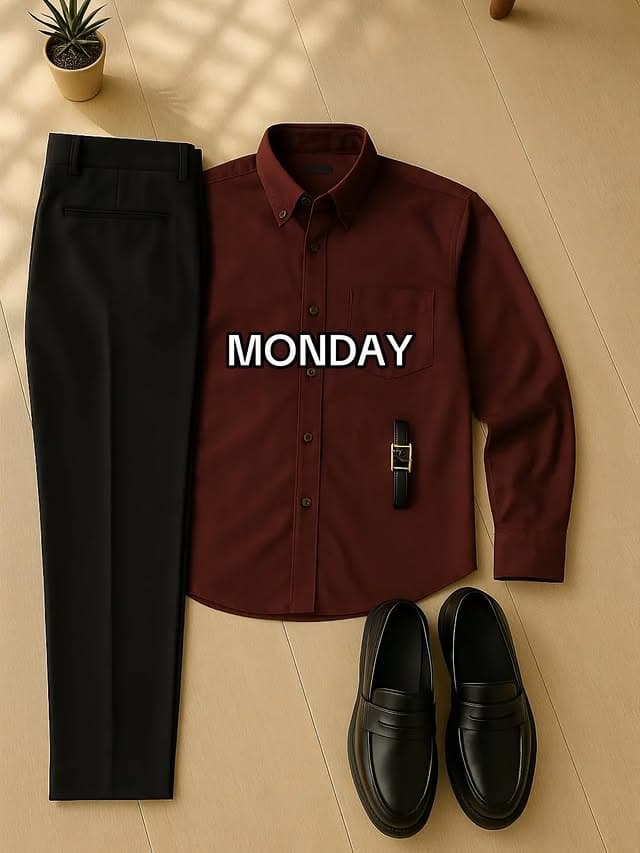
The outfit above shows the foundation clearly: one neutral top, one clean trouser and one simple shoe. It is not the only silhouette a man can wear. It is proof that ordinary pieces become useful when their colours and formality agree.
Do not copy a wardrobe made for someone else's routine. Write down what you dress for in a normal month:
Then estimate how often each setting occurs. If you work from home and go out casually, you need more strong casual combinations than suits. If your office expects a collar, your casual wardrobe should lean toward polos, Oxford shirts, overshirts and clean trousers.
This simple audit protects your budget. A good wardrobe is not a universal list of expensive essentials. It is a set of repeatable clothes for your real calendar.
Start with two dark neutrals, two light neutrals and one or two accent colours.
A safe first palette is:
You do not need every colour. You need enough agreement that tops and bottoms can switch partners.
A useful test is the three-outfit rule. Before buying a garment, name three complete outfits you can make with pieces already at home. If you cannot, the item may be creating a new problem rather than solving one.
For a deeper explanation of contrast and undertones, use the men's colour matching guide.

Begin with one formula you would happily wear tomorrow:
Clean T-shirt + well-fitting casual trousers + simple low-profile shoes
This gives you a reference point. Each purchase should improve or multiply that formula.
Your first T-shirt should be opaque, comfortable and easy to layer. White is useful, but navy, charcoal, cream or black may suit your laundry habits and complexion better. Check that:
“Clean” does not mean tight. A straight or relaxed fit can look equally intentional when the shoulders, sleeve length and body length are controlled.
This is a starting framework, not a command to buy everything at once.
These cover hot days, layering, relaxed dinners and smart-casual settings. Solid colours are easier first. Add stripes or checks after the base works.
Choose silhouettes that balance your proportions and let you move. Straight, tapered and relaxed cuts can all work. Avoid buying four versions of the same dark skinny jean while leaving every other situation uncovered.
Layers create variety faster than another pile of T-shirts. A navy overshirt over white, grey and pale blue tops already produces several combinations.
Shoes should match your climate and walking needs. Minimal sneakers are useful, but they are not mandatory. The best first pair is the one you can keep clean, wear comfortably and combine with most bottoms.
Use the essential shoes every man should own to choose the order that fits your life.
Shopping order matters because each early purchase should unlock later combinations.
Buy or identify:
That is enough to create four simple combinations before laundry becomes a problem.
Add:
You can now dress for dinner, a casual office or a date without jumping straight into formalwear.
Add an overshirt, knit and jacket. Only then consider bolder colour, pattern or trend pieces.
This sequence prevents the common mistake of buying exciting outerwear while lacking dependable trousers, shoes and base layers.

Your clothes do not all need the same cut, but they should look like they belong to the same wardrobe.
If your trousers are very wide and structured, a tiny fitted T-shirt may make the proportions feel disconnected. If your jeans are slim, an extremely long oversized shirt can overwhelm them. Aim for intentional balance:
Check individual garments properly. Our shirt fit checklist for men covers shoulders, chest, sleeves and length. The trouser fit guide for men explains waistband, seat, thigh, taper and break.
A tailor can shorten sleeves and hems or refine a waist. Tailoring cannot cheaply fix every shoulder, rise or armhole problem, so buy the hardest areas correctly first.
A wardrobe becomes easy when you stop inventing every outfit from zero.
T-shirt + jeans or casual trousers + sneakers
Use one light and one dark piece for simple contrast. Add a watch only if you want it.
T-shirt + overshirt + chinos + sneakers or boots
Keep the overshirt and trousers different enough to avoid looking like a mismatched suit.
Oxford shirt or polo + tailored casual trousers + loafers or Derbies
Tuck the shirt when its hem is long or the setting is smarter. Leave a shorter casual hem untucked when it ends around mid-fly.
T-shirt or Oxford shirt + crew-neck knit + dark jeans or trousers + casual jacket
Let the collar sit neatly and avoid stuffing a heavy shirt beneath a tight knit.
If a restaurant or workplace uses vague dress-code language, the smart casual guide for men will help you adjust the formula.

The trouser hem and shoe shape meet at the most visible transition in a casual outfit.
With low-profile sneakers, a clean hem with little stacking usually looks deliberate. That could mean a slight break, no break or a small cuff, depending on the trouser cut and your proportions. The pictured trousers taper toward the ankle and meet a simple white sneaker without excessive fabric pooling.
Do not copy an exact ankle gap without testing it on your body. Instead, check that:
Wider trousers usually need enough length and shoe presence to balance their volume. Slimmer trousers need room through the seat and thigh even when the lower leg tapers.
Lay every top beside every bottom. Photograph combinations that work. You may discover that a six-top, four-bottom wardrobe offers far more usable outfits than expected.
Use these multiplication moves:
Accessories should finish the system, not rescue it. Start with one practical watch and a belt only when the trousers require one. Match leather families rather than obsessing over identical shades.
Price alone does not tell you whether a purchase is smart.
A £90 jacket worn 90 times costs £1 per wear. A £30 statement shirt worn twice costs £15 per wear. You do not need to calculate every item precisely, but the principle reveals where quality matters.
Consider spending more on:
You can often save on simple T-shirts, seasonal experiments and accessories, provided the fit, opacity and construction meet your needs.
Check seams, zips, button security, fabric recovery and care instructions. Never buy a “bargain” that requires a lifestyle or laundry routine you will not maintain.
A shirt, trouser and shoe may work together but fail with everything else. Test every piece against the wider rail.
A brand can provide convenience, but no label fits every body, budget or product category equally well. Buy the best solution for the job. Loyalty should follow consistent fit and quality, not replace judgment.
Five black T-shirts can be practical if you wear them daily. Five almost-identical jackets usually indicate unplanned buying. Count by function, not just colour.
White sneakers, knitwear and shirts need different care. If you dislike ironing, choose forgiving fabrics and textures. If dry cleaning is inconvenient, check labels before buying.
Your reliable clothes should serve your real life. Rotate them, care for them and replace them when they no longer perform. A wardrobe is a tool, not a museum.
Buy clothes that fit and respect your body now. If your size changes, alter or replace items gradually. Daily discomfort is not a useful source of motivation.
Before paying, ask:
If several answers are no, leave it. A pause is cheaper than a wardrobe full of compromises.
How many clothes does a man need for a casual wardrobe?
There is no universal number, but around 15 coordinated pieces can create a strong starting system: five tops, four bottoms, three layers and three shoes. Adjust for climate, laundry frequency and dress codes.
What colours should a men's casual wardrobe start with?
Begin with navy, charcoal, white or cream, then add stone, olive, brown or pale blue. Two dark neutrals and two light neutrals make mixing easier than a collection of unrelated accent colours.
Should I buy a capsule wardrobe all at once?
No. Start with one reliable outfit, cover seven ordinary days, then add smarter pieces and layers. Gradual buying lets you learn which fits and formulas you genuinely repeat.
What is the first casual clothing item a man should buy?
Start with the largest gap in your routine. For many men that is a well-fitting neutral T-shirt, dark jeans or clean everyday shoes. Do not buy another top if trousers are the real problem.
Can a casual wardrobe include relaxed or wide-fit clothes?
Yes. A useful wardrobe is not limited to slim clothing. Keep proportions intentional, make sure the waistband and shoulders fit, and choose hems and shoes that balance the garment volume.
How do I avoid wasting money on clothes?
Use the three-outfit rule, shop from a written gap list, check care requirements and wait before buying trend-led pieces. Track what you actually wear for a month before the next shopping trip.
Build around your real week, not somebody else's shopping haul. Choose a compact palette, establish one dependable formula, cover the gaps in order and require every new item to earn its place through multiple outfits.
Save this guide and use the checklist before your next clothing purchase.
Build a reliable men’s wardrobe with 20 essential pieces: shirts, jeans, chinos, shoes, outerwear, accessories, and grooming basics.